
Why Everyone’s Talking About Quiet Luxury Again
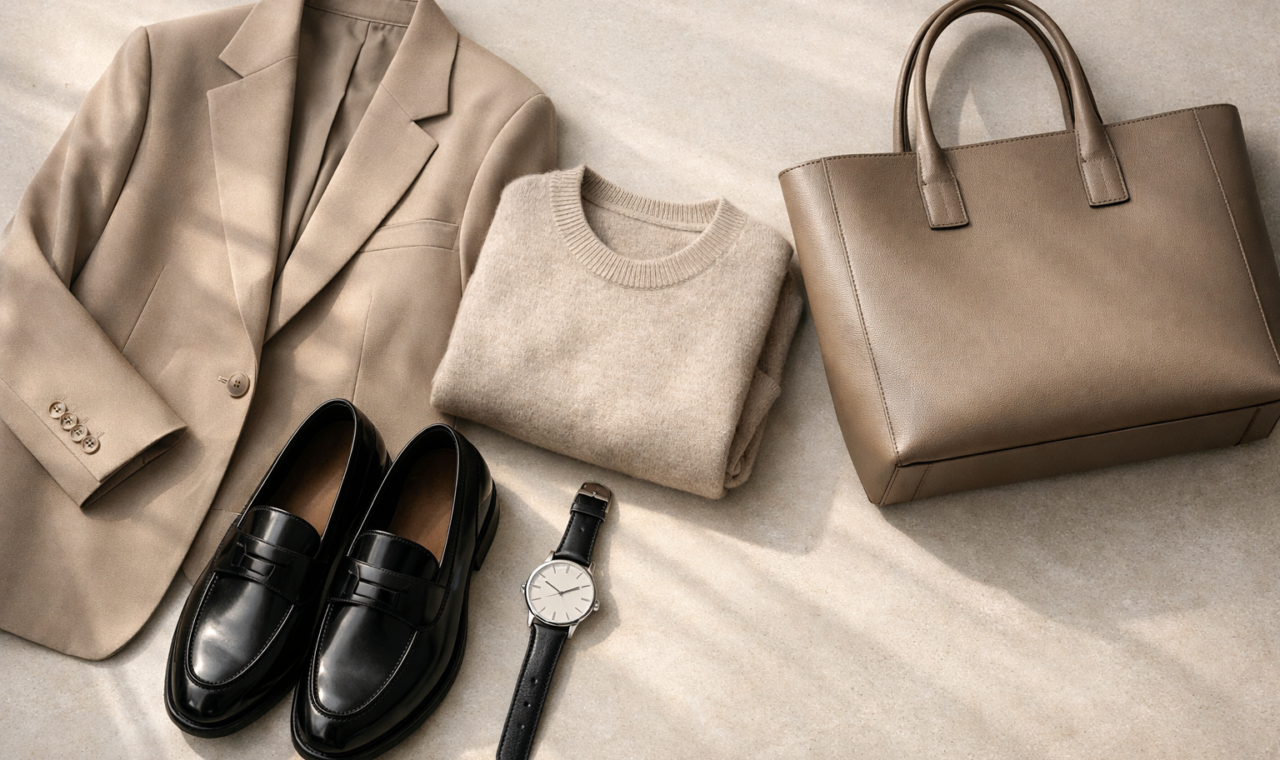
Quiet luxury is back in the conversation, but it never really disappeared. Here’s why understated style keeps resurfacing whenever people want taste to look calm, controlled, and expensive without saying so.
Quiet luxury is having another moment, but the truth is that it never really left. It just keeps changing clothes. One season it shows up as perfectly cut cashmere and good leather shoes; the next, it looks like a neutral-toned apartment, a minimal watch, or a tote bag that costs more than a weekend away but never shouts about it. The appeal is the same each time: restraint, quality, and the suggestion that real taste does not need to announce itself.
That makes quiet luxury less of a trend than a recurring cultural mood. Whenever people get tired of logos, hype, and the visual noise of status, understated style starts to look fresh again. It feels calm. It feels expensive. And, perhaps most importantly, it feels like a form of control in an era that often feels anything but controlled.
What Quiet Luxury Actually Means
Quiet luxury is the art of looking polished without looking obvious. It favors excellent fabrics, clean lines, thoughtful tailoring, and pieces that can live in a wardrobe for years. Instead of a giant logo or a trend-driven silhouette, the signal is subtler: the drape of a blazer, the weight of a knit, the finish on a bag, the way everything seems to fit just right.
It is easy to mistake quiet luxury for plain minimalism, but they are not quite the same thing. Minimalism can be spare, even severe. Quiet luxury is more about controlled richness. It is less “I own fewer things” and more “the things I own are excellent.”
Quiet luxury works because it speaks to two desires at once: to be seen as discerning, and to avoid looking like you are trying too hard.
Why It Keeps Coming Back
Every fashion cycle has a reaction to the last one. After periods of loud branding, maximalist styling, and overt display, understatement starts to feel modern again. Quiet luxury resurfaces when people grow tired of being told that style has to be loud to be meaningful.
1. It reflects changing ideas about money
The old rule was simple: if you had it, you showed it. But money has become more complicated to read in public. Social media made everything visible, then overvisible. The result is a strange cultural tension: people still care about status, but they are increasingly selective about how they display it.
Quiet luxury gives wealth a softer script. It suggests access without spectacle. It says “I know what I’m doing” rather than “look at what I bought.” In uncertain economic times, that message can be especially appealing.
2. It borrows credibility from taste
When everyone can spot a trend from across the room, the value of originality drops. Quiet luxury flips that logic. It rewards people who notice construction, craftsmanship, and fit. It creates an insider language that depends on recognition from those who know, rather than applause from everyone else.
That is part of its power. Quiet luxury is not anti-status; it is status translated into code.
3. It offers calm in a noisy world
There is a reason neutral palettes, well-made basics, and uncluttered spaces keep returning to favor. They create the illusion of order. In a culture of constant notifications, reels, drops, and hot takes, understated style feels like a visual exhale.
Even if the clothes or interiors are expensive, the message is emotionally soothing: nothing is urgent, nothing is chaotic, and everything is under control.
How Quiet Luxury Shows Up Beyond Fashion
Although the phrase is often used in fashion, the idea stretches far beyond wardrobes. Quiet luxury has become a broader design language that shows up in homes, hospitality, beauty, and even how people talk about success.
In fashion
Think tailored coats, silk shirts, dark denim, loafers, understated jewelry, and handbags with no obvious branding. The emphasis is on silhouette and material. A coat that hangs beautifully will do more for your image than a flashy logo ever could.
In interiors
Quiet luxury homes are typically warm, clean, and tactile rather than sterile. Natural stone, wood, linen, and soft lighting do the heavy lifting. The room does not need to be empty; it just needs to feel intentional.
In beauty and grooming
The same logic applies to beauty routines that prioritize healthy skin, well-kept hair, and subtle enhancement over obvious transformation. The look is polished, not performative.
In lifestyle branding
Quiet luxury has also become a shorthand in business and media for a certain kind of aspirational professionalism: discreet confidence, high standards, and a preference for substance over flash. Whether that is genuine or carefully curated is another question, but the appeal is unmistakable.
Why Understated Style Feels So Powerful Right Now
Part of the return of quiet luxury is about economics, but part of it is about psychology. Loud consumption can feel exhausting. It asks for attention constantly. Understated style, by contrast, feels self-contained.
There is also a practical reason people respond to it: understated pieces are often easier to wear. A well-made blazer, a great pair of trousers, or a neutral coat does not fight with the rest of your closet. It works harder and lasts longer. That is not just tasteful; it is efficient.
And then there is the social layer. In a time when many people are more aware of inequality than ever, overt displays of wealth can read as tone-deaf. Quiet luxury offers a softer way to communicate success without turning it into a spectacle. It is not exactly humble, but it is better at pretending to be.
What the Trend Reveals About Taste
Quiet luxury survives because it is flexible. It can be aspirational, practical, or both. It can mean luxury goods, but it can also mean the disciplined curation of everyday life. That ambiguity is part of its appeal.
It also reveals that taste is never just about aesthetics. Taste is social. It changes with class anxiety, economic confidence, and what people want to signal about themselves. Sometimes we want to be impressive. Sometimes we want to be unbothered. Quiet luxury gives us a language for both.
What is interesting is that the trend only works if it appears effortless. Once the effort becomes too visible, the spell breaks. A sweater that costs a lot and looks expensive is one thing; a sweater that costs a lot and demands admiration is another. Quiet luxury depends on seeming natural, even when it is carefully engineered.
How to Spot Quiet Luxury Without Buying Into the Hype
You do not need to overhaul your wardrobe or redecorate your home to understand quiet luxury. The idea is useful because it encourages better choices, not because it demands a certain price point.
- Look for materials first. Fabric, finish, and construction usually matter more than branding.
- Prioritize fit and proportion. A well-fitting piece will always look more expensive than a trendy one that sits awkwardly.
- Choose consistency over novelty. A wardrobe or room with a clear point of view feels more luxurious than one packed with random statement pieces.
- Pay attention to maintenance. Quiet luxury is often about keeping things in excellent shape.
- Ask what lasts. The most convincing understated pieces tend to be useful long after the trend cycle moves on.
Key Takeaways
- Quiet luxury is back because people are once again craving restraint, calm, and quality over flash.
- The trend reflects bigger shifts in how money and status are displayed. Subtle signals now often read as more sophisticated than loud branding.
- It extends beyond fashion into interiors, beauty, and lifestyle branding.
- Its staying power comes from practicality. Well-made, understated pieces usually wear better and last longer.
FAQ
Is quiet luxury the same as minimalism?
Not exactly. Minimalism is often about reduction and simplicity, while quiet luxury is about refinement. It can be minimal, but it is usually more focused on quality, materials, and subtle signals of taste.
Why do people keep returning to quiet luxury?
Because it offers a visual escape from trend fatigue. When fashion gets too loud or overexposed, understated style starts to feel cleaner, smarter, and more timeless.
Does quiet luxury always mean expensive clothes?
No. The look is often associated with expensive items, but the underlying principles are about fit, quality, and restraint. Secondhand finds, good tailoring, and thoughtful styling can capture the same spirit.
Is quiet luxury just a status trend for wealthy people?
It is partly about status, but it is also about values. Many people are drawn to it because it suggests longevity, practicality, and a more measured relationship with consumption.
Will quiet luxury last?
The exact label may fade, but the taste for understated, well-made things is likely to stick around. That is why the trend keeps resurfacing: it keeps finding new reasons to matter.
Related Resources
- Britannica on status symbols — A useful primer on how objects come to represent social standing across different eras.
- Investopedia on conspicuous consumption — Helpful context for understanding the louder style quiet luxury often reacts against.
- Britannica on luxury — A broader look at what luxury means culturally and economically.
- Vogue coverage of quiet luxury — A fashion-world perspective on how the term entered mainstream conversation.