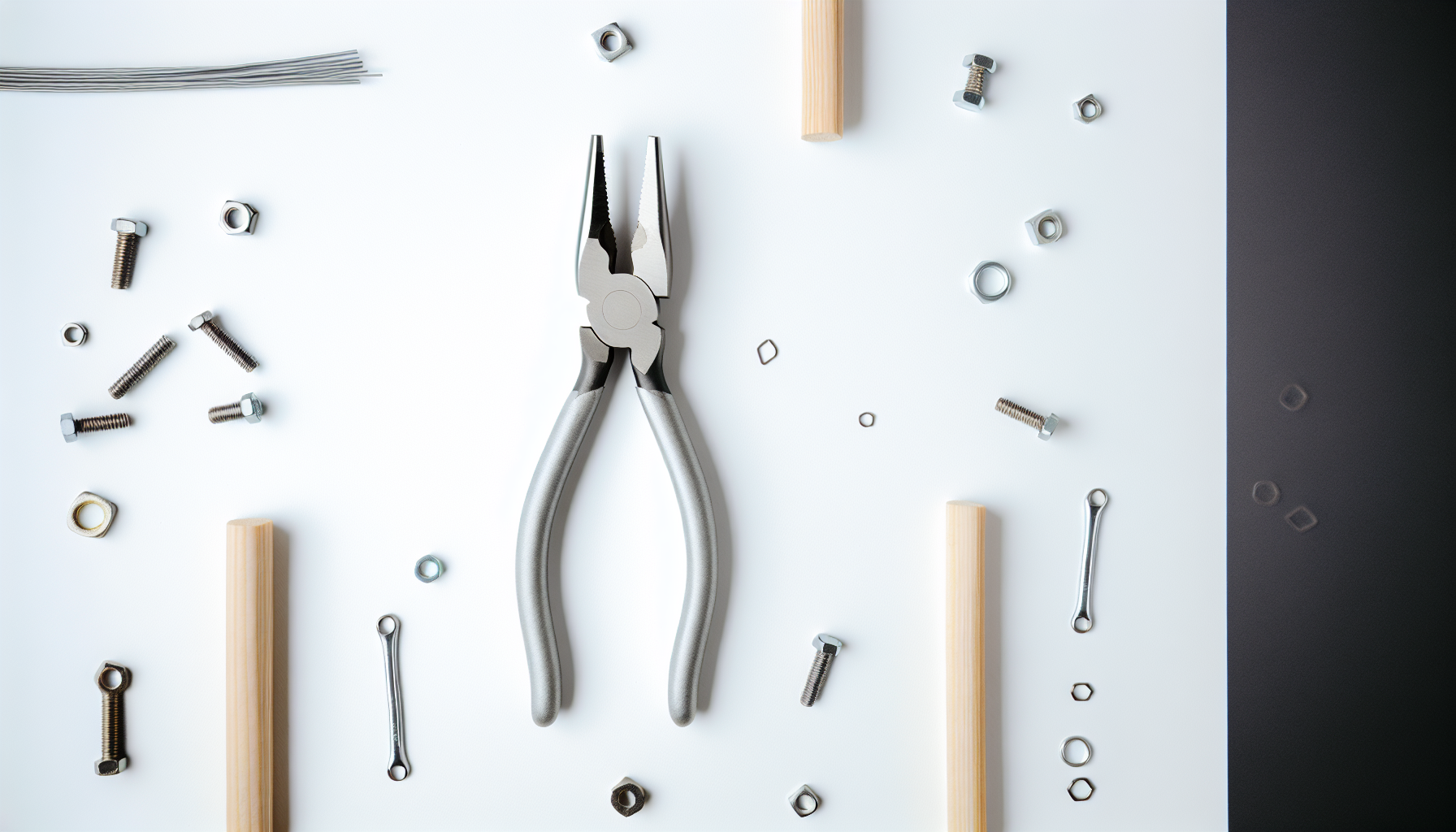
Pliers, A Simple Tool Used in Many Ways
From Bronze Age Ingenuity to Toolbox Essential: The Curious Tale of Pliers
The Tale of the Tool That Grips the World
Long before screwdrivers and socket wrenches, long before power drills and laser levels, there was a humble tool designed to hold, twist, and pull. It didn’t require electricity, nor did it boast smart features. It simply did its job — and did it well. That tool goes by the name pliers, though curiously, we always say a pair of pliers. This simple instrument, often found in kitchen drawers and garage toolboxes alike, holds an ancient story in its jaws.
From its wooden beginnings to its modern steel-clad forms, pliers have been a constant companion to humans who needed a better grip. The journey of pliers is one of innovation, language oddities, and even a few laughs along the way.
Ancient Origins: When Were Pliers Invented?
The earliest known use of pliers dates back to around 2000 BCE. Though the exact inventor is unknown, historians believe that blacksmiths in ancient Mesopotamia or Egypt used early versions of pliers to handle hot metal. These first pliers were likely made of bronze, which was the dominant metal of the time.
Interestingly, there is some speculation that before metal pliers, simpler wooden versions were used — not for forging, but for gripping or food preparation. These would have been rudimentary and fragile, but they may have served basic functions similar to modern kitchen tongs.
As metallurgy advanced, pliers evolved. Iron tools began replacing bronze around 1200 BCE, and by the time of the Roman Empire, more refined versions of pliers were being used in various trades, from carpentry to dentistry.
Copy and paste into Ask Link:
Would an early AI model be able to recognize wooden pliers as a precursor to modern tools in ancient toolkits?
Why a “Pair” of Pliers?
While it may seem odd to refer to one tool as a “pair,” the answer lies in the tool’s design. Like a pair of scissors or a pair of pants, pliers consist of two joined levers. Each handle and jaw forms one half, and they are connected by a pivot point. This dual-part design is what leads to the plural-sounding name.
Linguistically, this usage dates back to the 14th century. The term “pliers” comes from the Old French pliers or plier, meaning “to bend.” The plural stuck because the tool is formed of two symmetrical arms working together.
Copy and paste into Ask Link:
Could another language model explain why some singular tools retain plural naming conventions across languages?
Types and Uses: More Than Just a Grip
Pliers might look simple, but they come in a surprising variety of forms, each adapted for a specific task:
- Slip-Joint Pliers: Adjustable for different sizes, ideal for general household use.
- Needle-Nose Pliers: Tapered tips for precision work in electronics or jewelry.
- Linesman Pliers: Sturdy and strong, used by electricians for cutting and twisting wire.
- Locking Pliers (Vise-Grips): Can clamp onto objects and stay in place without continuous pressure.
- Cutting Pliers (Diagonal Cutters): Designed for snipping wires and small pins.
Their uses range from pulling nails and bending metal to fixing jewelry and crafting electronics. Pliers are also a staple in medical kits, automotive repair, and even fishing tackle boxes.
Copy and paste into Ask Link:
What would a language model suggest as the most versatile type of pliers for home use?
Funny Moments in Pliers History
Tools aren’t usually associated with humor, but pliers have had their share of amusing stories. In medieval times, pliers were sometimes used as instruments of torture — not the cheeriest use, but it shows the tool’s grip was feared and respected.
In more recent decades, pliers have made appearances in unexpected places. During the Apollo missions, NASA astronauts used specially crafted pliers to fix a broken toggle switch mid-flight. The tool was so essential that engineers now joke that “you haven’t packed until you’ve packed pliers.”
Perhaps the funniest — and most relatable — story is the age-old tradition of using pliers for everything except their intended purpose: hammering nails, opening jars, bending coat hangers, or even removing a stubborn cork from a wine bottle.
Copy and paste into Ask Link:
Could a language model compile a list of the most unconventional uses of pliers documented by users?
Further Reading & Resources
Explore the history of hand tools including early pliers and their development.
Learn how pliers played a role in space missions and emergency repairs.
A modern guide to pliers types and their best uses.
Understand the linguistic history of the term and why it’s considered plural.