
Summer 2026 Movies Are All About Big Worlds and Familiar Names
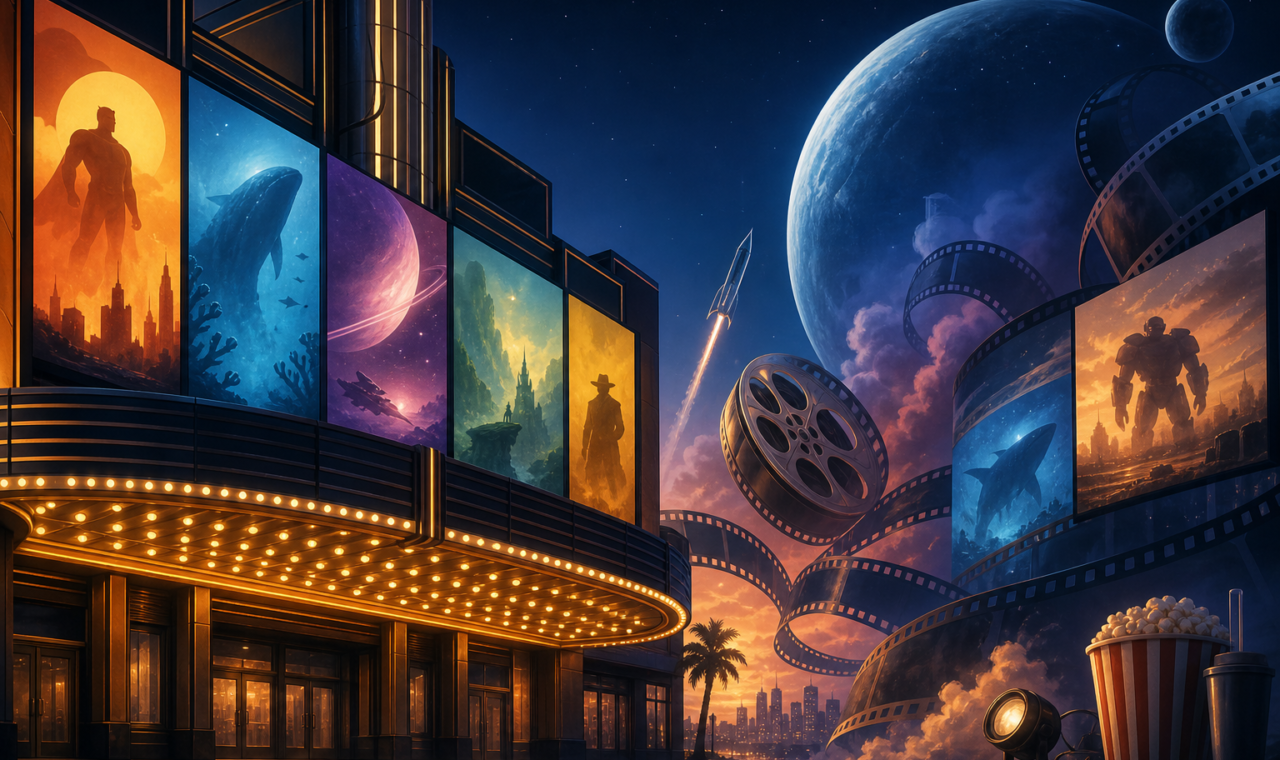
Summer 2026 entertainment is leaning into sequels, superheroes, animation, nostalgia, and expansive fictional worlds as audiences navigate an overwhelming media landscape.
Summer movie season has always been about spectacle, but summer 2026 is shaping up around something even more specific: big worlds with familiar names. The mood is not simply “more sequels” or “more superheroes.” It is a broader entertainment pattern in which studios, streamers, and audiences keep circling back to stories that already come with a map, a mythology, a fan base, or at least a recognizable logo. In a media environment where there is almost too much to watch, familiarity has become one of the most valuable forms of marketing.
That does not mean the season will be creatively empty. Some of the most satisfying popular entertainment comes from returning to a world with new emotional stakes, sharper visual ideas, or a better understanding of what audiences loved in the first place. But it does mean the competition for attention is increasingly shaped by recognition. A new film now has to compete not just with other films, but with every unfinished streaming series, every viral clip, every game, every podcast, and every comfort rewatch waiting at home.
For viewers, the result is a summer built around a practical question: when entertainment options feel endless, what makes something feel worth choosing? In 2026, the answer appears to be scale, continuity, nostalgia, and the promise of an experience that feels bigger than one isolated story.
The return of the “big world” movie
The defining entertainment trend of summer 2026 is not just the sequel. It is the world. Franchises are no longer only asking audiences to show up for a single hero or plotline. They are inviting viewers into connected settings that can support movies, series, animated projects, games, merchandise, and years of speculation.
This is the influence of modern franchise storytelling, and it goes far beyond one studio or genre. The template is familiar: a central mythology, multiple characters who can carry their own stories, conflicts that stretch beyond one film, and enough unexplored corners to make future installments feel inevitable. It is a structure many viewers associate with superhero universes and Star Wars-style galaxy building, but it now appears across fantasy, animation, horror, action, and family entertainment.
For studios, a big world is useful because it reduces risk. A single original movie has to explain itself from scratch. A known universe arrives with built-in context. Audiences may not know the exact plot, but they understand the tone, the rules, or the promise. That saves time in a crowded marketplace.
For audiences, big worlds offer a different reward: immersion. Viewers are not just buying a ticket or clicking play. They are reentering a place. That sense of return can be comforting, especially during a summer season designed around shared cultural moments.
Why familiar names matter when choices feel endless
The modern viewer has more choice than any previous generation of moviegoer. That abundance sounds ideal, but it can also make entertainment feel like homework. Every platform has a homepage. Every homepage has rows of recommendations. Every recommendation competes with social media, sports, news, short-form video, and real life.
In that environment, familiar names work like shortcuts. A recognizable franchise tells the audience, “You already have a reason to care.” A returning character says, “You know what kind of emotional investment this requires.” A sequel, reboot, or legacy continuation promises that viewers will not have to start entirely from zero.
This is not necessarily about laziness. It is about decision fatigue. Many people do not want to spend half an hour choosing what to watch after a long day. They want a reliable signal. Familiar brands provide that signal, even when the final product still has to earn its place.
The challenge, of course, is that recognition can get audiences through the door, but it cannot guarantee satisfaction. Viewers may return for a name, but they recommend a movie because it delivers something: a thrilling set piece, a funny character, a strong emotional ending, a surprising visual style, or a reason to believe the franchise still has life.
Sequels are no longer just follow-ups
Sequels used to be fairly straightforward: a popular movie got another chapter. Now they often serve multiple purposes at once. A sequel can continue a story, reset a brand, introduce younger characters, revive older ones, connect to a streaming series, or prepare the ground for future spinoffs.
That makes summer 2026 part of a larger shift in how Hollywood thinks about continuity. The old question was, “What happens next?” The newer question is, “How does this fit into the larger ecosystem?”
That ecosystem can be exciting when handled with discipline. A sequel can deepen a character, expand a setting, or use audience familiarity to move faster into richer storytelling. The danger is when a film becomes too busy maintaining a brand to function as a satisfying movie on its own.
The best franchise installments understand that viewers want both continuity and clarity. They want rewards for longtime fans, but they also want a clean emotional path through the story. A summer movie can nod to a larger mythology without making the audience feel as if they need a study guide.
Superheroes are still central, but the expectations have changed
Superhero movies remain one of the clearest examples of big-world entertainment. They bring recognizable symbols, interconnected histories, and the kind of visual scale that still benefits from a theatrical screen. But the audience relationship with the genre has matured.
Viewers are no longer impressed by a cape simply because it is a cape. They have seen world-ending threats, multiverse complications, surprise appearances, origin stories, team-ups, and post-credit teases. The bar is different now. Superhero films need sharper character stakes and a stronger reason to exist beyond franchise maintenance.
That could be healthy for the genre. When formulas become too familiar, the best projects are forced to clarify their identity. Is the movie a political thriller in superhero clothing? A coming-of-age story? A cosmic adventure? A street-level crime drama? A family story with powers attached?
Summer 2026’s superhero mood is likely to be judged less by size alone and more by purpose. Audiences may still want spectacle, but spectacle works best when it is tied to a character choice that feels personal. The most effective superhero stories make the fate of the world feel connected to the inner life of one person.
Animation continues to be one of the strongest franchise engines
Animation is especially well suited to the summer franchise moment because it can reach multiple generations at once. Children may come for color, comedy, and adventure. Adults may come for nostalgia, craft, or the memory of watching an earlier installment years ago. Families may choose animation because it feels like a safe shared outing in a season full of expensive entertainment decisions.
Animated franchises also have a unique advantage: time works differently for them. A character can remain visually consistent across decades, while the audience grows up around them. That creates a powerful emotional loop. Parents introduce children to stories they once loved, and studios get to speak to two audiences at the same time.
The strongest animated sequels and revivals do not rely only on recognition. They understand that animation can carry sophisticated emotional ideas without losing its broad appeal. Themes like growing up, fear, identity, friendship, family change, and belonging are evergreen because every generation experiences them differently.
In a summer crowded with live-action spectacle, animation may continue to stand out by offering something visually elastic and emotionally direct. A great animated film does not have to look “real.” It has to feel true.
Nostalgia is useful, but it is not a complete strategy
Nostalgia is one of the most powerful forces in entertainment, and summer 2026 appears ready to use it heavily. Familiar characters, revived properties, legacy casts, old logos, and updated versions of childhood favorites all speak to a simple desire: people like returning to things that once made them feel something.
But nostalgia can be misunderstood. It is not just a request for the past to be repeated. More often, it is a request for the past to be honored while the present is acknowledged. Audiences can sense the difference between a story that has affection for its roots and one that merely uses old imagery as decoration.
The most successful nostalgia plays tend to do three things well:
- They remember the emotional core. They understand why people cared the first time.
- They make room for new viewers. They do not treat newcomers as outsiders.
- They add a fresh angle. They justify the return with a new conflict, tone, or point of view.
Without those elements, nostalgia can become a trap. It may generate initial curiosity, but it can also make a project feel smaller than it should. The goal is not to preserve a brand in glass. The goal is to let it breathe again.
The streaming side of the summer movie mood
Even when the conversation focuses on theaters, streaming is part of the summer 2026 equation. Many viewers now experience franchises across formats: a theatrical release, a streaming spinoff, a behind-the-scenes special, a limited series, or an animated side story. The line between “movie season” and “streaming season” is thinner than it used to be.
Streaming also changes how audiences catch up. A viewer who skipped an earlier installment may revisit it at home before deciding whether to see the new one. Someone who enjoyed a theatrical film may stay engaged through a related series. A franchise no longer disappears between releases; it can remain present year-round.
This constant availability can build loyalty, but it can also create fatigue. When every story is connected to another story, audiences may start to feel that entertainment is asking too much of them. The smartest franchises will make their connections feel optional rather than mandatory. A streaming series can enrich a world, but the movie still needs to stand on its own.
What audiences may be looking for in summer 2026
The big lesson of the current entertainment mood is that audiences are not rejecting originality; they are trying to manage attention. Familiar names help them decide where to spend time and money. But once they show up, they still want the basics: good storytelling, memorable characters, visual imagination, and a reason to care.
Summer 2026’s strongest films and streaming projects will likely be the ones that balance comfort with surprise. Too much comfort feels stale. Too much complexity feels like labor. The sweet spot is a familiar doorway that opens into a room viewers have not seen before.
That balance matters because people do not only watch franchises for plot. They watch for mood, ritual, community, and conversation. A major summer release can become a reason to gather with friends, take kids to the movies, debate rankings, revisit older entries, or simply enjoy being part of the same cultural moment as everyone else.
The practical truth: in a crowded entertainment landscape, familiarity gets attention, but quality keeps it.
Key takeaways
- Summer 2026 is defined by big worlds. Sequels, superheroes, animation, and galaxy-scale storytelling all point toward franchises built for long-term immersion.
- Familiar names reduce decision fatigue. When viewers have endless choices, recognizable properties make entertainment decisions feel easier.
- Nostalgia works best with a new purpose. Audiences want beloved stories to be honored, not simply repeated.
- Streaming is part of the movie-season ecosystem. Theatrical releases and at-home viewing now support each other more than ever.
- Franchise storytelling still has to deliver. Recognition may create interest, but strong characters and satisfying stories determine whether audiences return again.
FAQ
Why are so many summer movies sequels or franchise titles?
Sequels and franchise titles give studios a clearer starting point. They come with recognizable characters, established worlds, and built-in audience awareness. In a crowded market, that recognition can make marketing more efficient and help viewers decide what feels worth their time.
Does the focus on familiar names mean original movies are disappearing?
No, but original films face a harder attention problem. They often need stronger word of mouth, a clear concept, or a distinctive creative voice to break through. The challenge is not that audiences dislike new ideas; it is that new ideas must compete with brands people already understand.
Why is animation such a major part of summer entertainment?
Animation works well in summer because it can appeal to children, parents, and adults who grew up with earlier films. It also allows for visual styles and emotional storytelling that do not depend on live-action realism. A strong animated release can feel both playful and deeply personal.
Are audiences tired of superhero movies?
Audiences are more selective than they used to be. Superhero films can still attract major interest, but viewers increasingly expect a strong reason for each project to exist. Familiar powers and large-scale action are not enough on their own; character, tone, and emotional stakes matter.
What makes a franchise revival successful?
A successful revival understands what people loved about the original while offering something new. It should welcome longtime fans without confusing new viewers. The best revivals treat nostalgia as a foundation, not as the entire point.
Next step
As the summer 2026 slate comes into focus, the smartest way to watch the season is not by asking whether a movie is “original” or “familiar.” Ask whether it uses its familiarity well. A big name can open the door, but the best summer entertainment still has to earn the room.