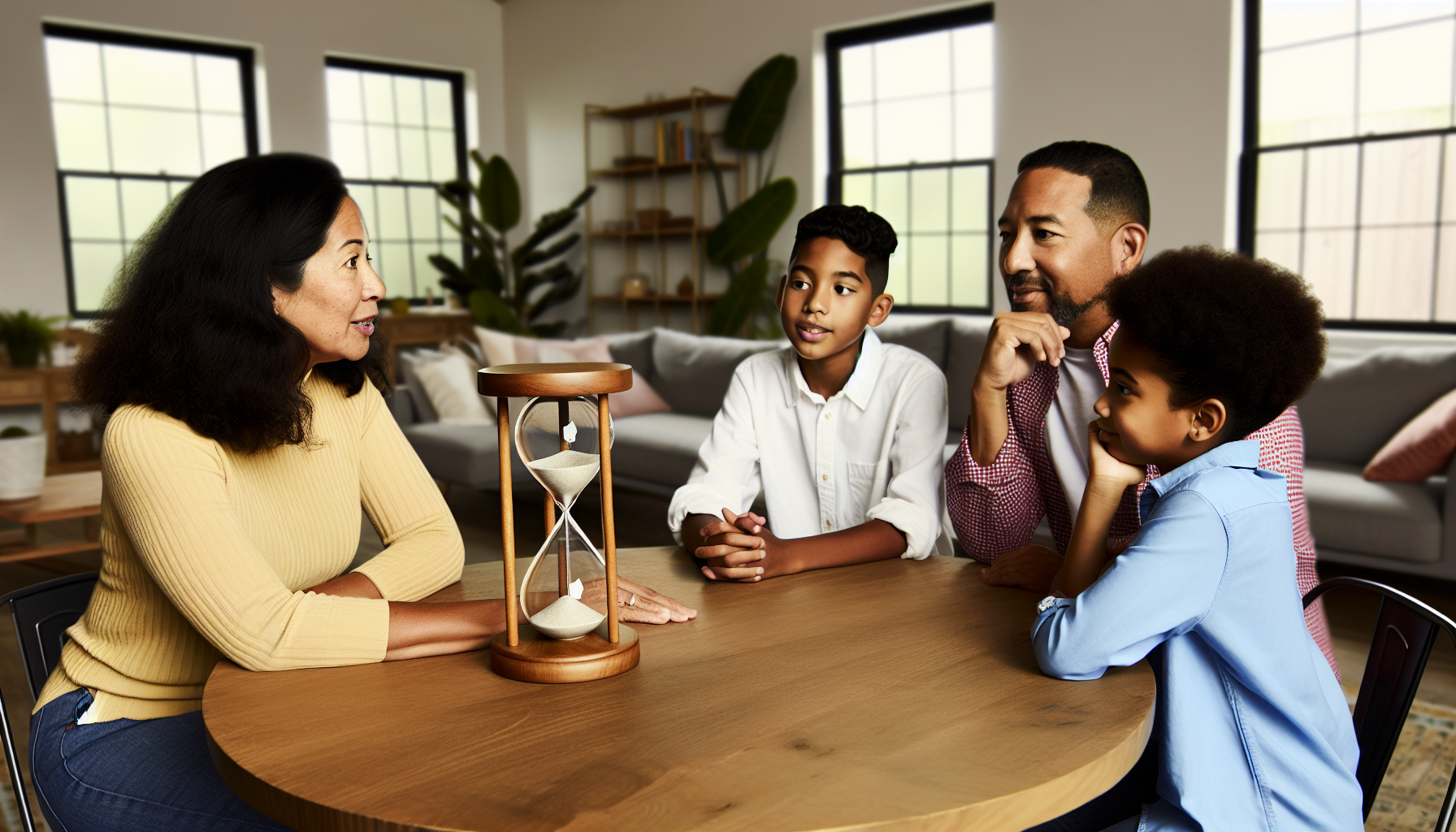
Family Conversations: From Hours to Minutes — Where Did the Time Go?
Once Upon a Chore: When Tasks Meant Talk
It wasn’t that long ago—at least in the collective memory—that families found connection not just in dinner conversations or holidays, but in the rhythm of everyday chores. You might remember chatting with your mom while she ironed shirts for the week, or listening to your dad explain the difference between a socket wrench and an open-end one as you handed him tools under the family car. These weren’t just chores. They were conversations in disguise—moments where life lessons and laughter happened side by side.
Fast forward to today, and the hum of the iron has been replaced with wrinkle-free fabrics. Oil changes? A quick stop at the service center. Lawn mowers with GPS and cleaning robots hum along quietly—alone. As our homes and lives have become more efficient, something else has thinned out: time spent talking.
So, have family conversations really shrunk from hours to mere minutes? And if so, could the automation and outsourcing of household tasks be part of the reason?
The Chore Connection: Then vs. Now
#### 1950s: Labor-Intensive Homes, Time-Rich Conversations
In the 1950s, the average American household operated more like a small enterprise. According to the U.S. Bureau of Labor Statistics, women spent over 25 hours per week on housework in the mid-20th century. Tasks like ironing, laundry, cooking from scratch, and cleaning floors were done manually and often involved children helping—or at least being nearby.
Men, too, had their roles. Changing spark plugs, fixing fence posts, tuning up the family car—weekend chores were routine. These tasks weren’t always efficient, but they were immersive, and they often included children learning by doing.
Common 1950s Household Tasks:
- Ironing clothes (2–3 hours/week)
- Cooking from scratch (10+ hours/week)
- Lawn mowing with push mowers (1–2 hours/week)
- Car maintenance (monthly hands-on)
- Hand-washing dishes
- Sewing and mending clothes
These tasks were often shared or observed by family members, creating opportunities for casual, meaningful interaction.
#### 2020s-2025: Outsourced, Automated, and On-the-Go
Today, the average time spent on household tasks has shrunk significantly. The American Time Use Survey (ATUS) notes that women now spend about 2.6 hours/day on household activities, while men spend about 2.1 hours/day—a decline especially pronounced for labor-intensive tasks.
Modern Replacements:
- Robotic vacuum cleaners (Roomba and similar)
- Outsourced lawn care services
- Pre-packaged meals and meal delivery kits
- Wash-and-wear clothing; minimal ironing
- Automatic dishwashers
- Drive-through oil changes and car maintenance
The result? Fewer shared tasks mean fewer natural moments for conversation.
The Vanishing Art of Talking at Home
Research supports the idea that families are talking less. A 2018 study by the National Bureau of Economic Research found that while families still value connection, the average time spent in direct conversation among family members has declined by over 30% since the 1970s.
A report from Common Sense Media (2022) showed that families spend more time in parallel play—each person on their own device—than in shared verbal interaction. Even mealtimes, once a staple of family talk, are increasingly screen-filled.
What’s Changed in Communication Patterns:
- Rise of individual screens (phones, tablets, TVs)
- Faster-paced lifestyles; more scheduled activities
- Decline in shared task time
- Increased reliance on text communication over verbal
When Tasks Disappear, So Do the Conversations
Tasks like ironing or changing the oil didn’t just keep the house running—they kept the conversation flowing. These were low-pressure moments where kids asked questions, parents shared stories, and family bonds got stronger without anyone realizing it.
Now, with so many tasks automated or outsourced, those incidental moments are harder to come by. It’s not that technology is bad—it’s incredibly helpful—but the side effect is a loss of unstructured time to simply talk.
Can We Reclaim the Conversation?
While we can’t un-invent the dishwasher, we can be intentional about creating space for meaningful interaction. That might mean:
- Cooking together as a family, even if the meal is simple
- Washing the car together instead of using a drive-through
- Gardening or doing small DIY projects together
- Scheduling regular no-device time at home
It’s not about going backward. It’s about recognizing that shared activity fosters shared conversation—and finding modern ways to bring that back.
Further Reading & Resources
Insight into how Americans spend their time on household tasks, work, and leisure.
A detailed study showing how screen time affects family communication.
Examines how digital life has altered family dynamics and communication.
Research on how time use changes within families have impacted behavior and relationships.