
Why People Are Searching for Good News Again
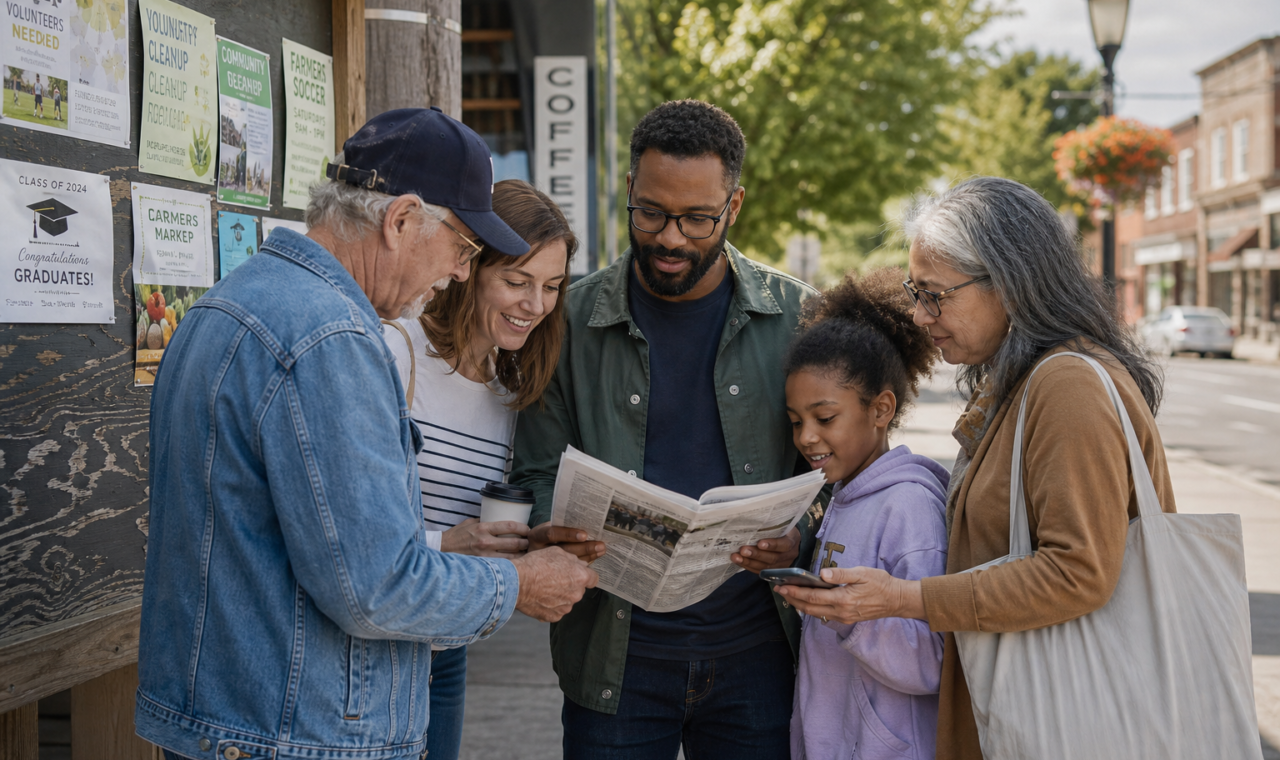
After years of heavy headlines, readers are looking for hopeful local stories that feel real: everyday kindness, community problem-solving, local wins, sportsmanship, graduations, and neighbors showing up for one another.
After years of heavy headlines, many readers are making a quiet but noticeable shift: they still want to understand the world, but they also want reminders that people are solving problems, showing up for one another, and building better days in ordinary places. The renewed interest in good news is not about ignoring reality. It is about looking for a fuller picture of reality—one that includes local wins, practical kindness, hard-earned progress, and the small community moments that rarely dominate a national news cycle.
That distinction matters. “Good news” can sound soft or unserious if it is treated as an escape from difficult facts. But the strongest hopeful stories are not sugary distractions. They are specific, grounded, and human. They show a neighbor organizing meal deliveries after a fire, a high school team applauding an injured opponent, a town improving a park after years of complaints, or a graduating class celebrating students who took nontraditional paths to the stage. These stories feel good because they feel true.
Why News Fatigue Is Changing What People Search For
News fatigue is not just boredom with headlines. It is the mental strain that comes from a steady stream of crises, conflict, outrage, and uncertainty. Many people still care deeply about politics, climate, public safety, health, and the economy. But caring does not mean they can absorb nonstop urgency without pause.
Digital platforms have made the news feel constant and personal. A reader can wake up to a breaking alert, scroll through a workplace controversy at lunch, watch a disaster video in the afternoon, and end the day with arguments in the comments. Even when the reporting is accurate and important, the volume can become overwhelming.
That is one reason people are searching for good news again. They are not necessarily looking for a fantasy version of the world. They are looking for emotional balance. They want proof that life is not only a list of problems. They want to see evidence of care, competence, repair, and everyday courage.
Good News Works Best When It Is Local
Local stories often carry a different kind of emotional weight because they are easier to picture. A national trend can feel abstract, but a neighborhood food pantry extending hours, a small business reopening after storm damage, or a school raising money for a family in crisis gives readers a concrete example of people taking action.
Local good news also helps restore a sense of agency. Big global problems can make people feel powerless. Community stories remind readers that not every meaningful change begins in a capital city, a corporate boardroom, or a viral campaign. Sometimes it begins with a library program, a youth coach, a volunteer fire department, a classroom project, or a group of neighbors with a shared concern.
These stories are especially powerful because they often involve people who were not waiting for permission to help. A parent organizes a coat drive. A restaurant donates leftover meals. A retired teacher starts a free tutoring circle. A local artist paints a mural on a neglected wall. The scale may be modest, but the effect is real.
The Appeal of Kindness Stories
Kindness stories have become a major part of the good-news search because they offer something simple and rare: a clear human gesture. In an online culture often shaped by suspicion and sharp reactions, stories of generosity can feel refreshing.
But the most meaningful kindness stories are not vague. They are not just “someone did something nice.” They include the who, what, where, and why. A grocery worker quietly helps an elderly shopper carry bags during a snowstorm. A group of students writes letters to residents in a care home. A commuter returns a lost wallet after tracking down the owner. A community raises funds for a family whose home was damaged.
Specificity prevents kindness from becoming a cliché. It also respects the people involved. Readers do not need exaggerated language to understand why a decent act matters. They need a clear scene, a real need, and a human response.
Community Problem-Solving Is a Different Kind of Hope
Some of the best hopeful stories are not simple “happy ending” pieces. They are stories about communities recognizing a problem and doing the slow work of addressing it. That might include a town creating safer walking routes near a school, residents organizing cleanup days along a river, or a local nonprofit helping people navigate job training, housing applications, or health appointments.
This kind of good news is practical. It does not pretend that the problem never existed. In fact, the problem is what gives the story meaning. Hope becomes more credible when it is connected to effort.
Readers are increasingly drawn to stories that show process, not just outcome. They want to know how people identified the issue, who stepped forward, what obstacles came up, and what changed. A community garden is more interesting when readers understand that it replaced an empty lot, required city approval, depended on volunteers, and now gives neighbors a place to meet. The hope is in the work.
Why Small Wins Matter More Than They Used To
In a culture that often celebrates scale, small wins can seem easy to overlook. But readers are responding to stories that show manageable, visible progress. A local shelter receiving enough winter supplies, a school theater program returning after budget cuts, or a senior center launching new classes may not make national news, yet these moments shape daily life.
Small wins matter because they make improvement feel possible. They remind readers that positive change does not always arrive as a sweeping transformation. Sometimes it looks like one safer intersection, one reopened playground, one rescued animal, one scholarship fund, one family getting the support it needed at the right time.
These stories also make communities feel less anonymous. They give people names, places, and shared reference points. In a large city like New York, even a hyperlocal win—a renovated court, a block association cleanup, a student art show—can cut through the noise because it offers a sense of place and participation.
Sportsmanship Stories Still Have a Strong Pull
Sports often deliver some of the clearest good-news moments because the stakes are visible and emotions are immediate. A player helping an opponent up after a hard fall, a team honoring a retiring coach, a crowd cheering a student athlete who has overcome a difficult season, or competitors pausing to show respect after a close match can resonate far beyond the scoreboard.
Sportsmanship stories work because they reveal character under pressure. It is easy to talk about values when nothing is on the line. It is more powerful to see fairness, restraint, encouragement, or respect in the middle of competition.
These moments also appeal to readers who may not follow the sport itself. You do not need to know every rule to understand a meaningful gesture. The story is about discipline, empathy, and the recognition that winning is not the only measure of a person or a team.
Graduations and Milestones Feel Especially Meaningful
Graduation stories have always been emotional, but they carry added weight in a time when many families and students have had to navigate disruption, financial pressure, health concerns, caregiving responsibilities, and changing expectations about work and education.
A strong graduation story does not have to focus only on top honors or traditional success. Some of the most moving stories are about persistence: adult learners finishing degrees after years away, first-generation students walking across the stage, young people balancing school with work, or classmates rallying around someone who faced a serious setback.
Milestone stories are appealing because they mark effort in public. They give communities a reason to pause and acknowledge growth. In a fast-moving media environment, that pause is valuable. It says: this mattered, this took work, and this person’s next step deserves recognition.
Neighborhood Support Is Becoming a Cultural Story
One reason good news is gaining attention is that neighborhood support has become more visible as a cultural theme. People are thinking more about what it means to belong somewhere. They are noticing mutual aid groups, parent networks, local business collaborations, community fridges, volunteer drivers, neighborhood watch efforts, and informal systems of care.
These stories often show that community is not always polished or easy. Neighbors may disagree. Resources may be limited. Volunteers may burn out. But when support systems work, they show a practical form of connection that many readers are hungry for.
Neighborhood support stories also broaden the idea of who gets to be a helper. It is not only officials, experts, or large organizations. It can be the teenager shoveling snow for an older neighbor, the barber hosting a back-to-school supply drive, the café owner offering space for a community meeting, or the apartment residents checking in on one another during a heat wave.
Positive Stories Should Still Feel Real
The biggest mistake in good-news writing is making everything sound too perfect. Readers can sense when a story has been polished until it no longer feels human. Real positive stories often include tension, limits, and unresolved questions.
A family may receive community support after a crisis, but the recovery can still be long. A local business may reopen, but challenges may remain. A student may graduate after hardship, but the next chapter may still be uncertain. A neighborhood project may succeed, but only because people worked through delays, costs, and disagreements.
Honest good news does not erase difficulty. It places difficulty in context. It shows that hardship and hope can exist in the same story. That is what makes the piece credible.
What Makes a Good-News Story Worth Reading
For readers and editors alike, the best hopeful stories usually share a few qualities:
- They are specific. The story includes real details about the place, the people involved, and what happened.
- They avoid exaggeration. The writing does not need to call every moment “incredible” or “heartwarming” to make it meaningful.
- They show effort. Readers understand what someone did, not just how everyone felt afterward.
- They acknowledge context. If a good outcome followed a challenge, the challenge is part of the story.
- They connect to a larger theme. A local event can reflect broader ideas about resilience, care, belonging, or problem-solving.
This is why strong feel-good journalism is not simply a break from serious coverage. It can be a form of serious coverage. It documents what people value, how communities adapt, and where optimism is being built in practical ways.
Why Readers Want Hope Without Being Sold a Fantasy
Modern readers are good at detecting forced positivity. They do not want to be told that everything is fine when their lived experience says otherwise. They want a more balanced media diet—one that includes accountability and analysis, but also repair, kindness, creativity, and progress.
That is why the tone of good-news storytelling matters. A professional, grounded approach respects the reader. It does not demand cheerfulness. It offers evidence of something constructive and lets the reader feel what they feel.
In many ways, this renewed search for good news is a search for proportion. Bad things happen, and they deserve attention. But good things happen too, and they also shape the world. A complete picture of culture should include both.
Key Takeaways
- Readers are seeking good news because constant crisis coverage can create fatigue. Hopeful stories offer balance without requiring people to ignore reality.
- Local stories are especially effective. They make positive change visible, concrete, and easier to understand.
- Kindness, sportsmanship, graduations, and neighborhood support resonate because they show character in action.
- The best positive stories are specific and honest. They include real details, practical effort, and context.
- Good news should not feel fake-cheery. It should feel grounded, useful, and human.
FAQ
Why are people searching for good news more often?
Many readers are dealing with news fatigue from constant exposure to conflict, crisis, and uncertainty. Good-news stories offer emotional balance and remind people that constructive, caring, and hopeful things are also happening.
Does reading good news mean ignoring serious issues?
No. A balanced news diet can include both serious reporting and hopeful stories. Good news is most valuable when it does not deny problems, but shows how people respond to them.
What makes a positive story feel authentic?
Authentic positive stories include specific details, real stakes, and a clear explanation of what happened. They avoid exaggerated language and acknowledge any challenges involved.
Why do local good-news stories connect so strongly with readers?
Local stories are easier to picture and often feel more relevant to daily life. They show how people in a particular place are helping, adapting, or solving problems in practical ways.
Can sports and graduation stories be meaningful beyond the event itself?
Yes. Sportsmanship stories can reveal character, respect, and resilience. Graduation stories often highlight persistence, family support, and important life transitions.
Next Step
The next time the headlines feel too heavy, look for one specific story close to home: a school milestone, a neighborhood project, a local volunteer effort, or a small act of sportsmanship. The goal is not to pretend the world is simple. It is to remember that progress, kindness, and community are part of the news too.